Revealed: group shaping US nutrition receives millions from big food industry
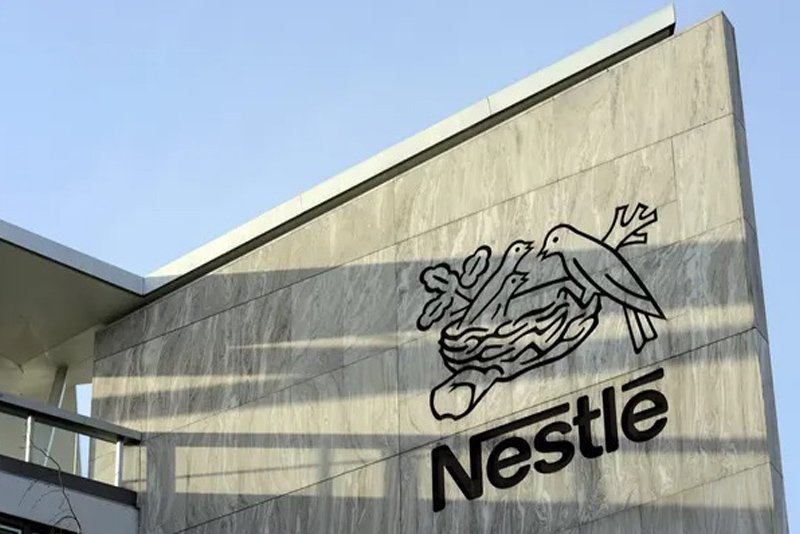
Academy of Nutrition and Dietetics has a record of quid pro quos with a range of food giants, documents show Newly released documents show an influential group that helps shape US food policy and steers consumers toward nutritional products has financial ties to the world’s largest processed food companies and has been controlled by former industry employees who have worked for companies like Monsanto. The documents reveal the Academy of Nutrition and Dietetics has a record of quid pro quos with a range of food giants, owns stock in ultra-processed food companies and has received millions in contributions from producers of pop, candy, and processed foods linked to diabetes, heart disease, obesity and other health problems. The findings are a part of a recently published peer-reviewed study that examined a trove of financial documents and internal communications obtained through a Freedom of Information Act (Foia) request. “It’s incredibly influential so if the Academy is corrupt then nutritional policy in the US is going to be corrupt,” said Gary Ruskin, executive director of US Right to Know, and a co-author of the study. The investigative non-profit developed the study with researchers from non-profits and universities in the US and UK. “If we’re ever going to solve the problems of obesity and diabetes in the US and elsewhere, then we’re going to have to tackle the corruption in our health institutions,” Ruskin added. The Academy says it as an independent voice and “trusted educational resource for consumers”. It lobbies Congress and represents and provides information to over 110,000 US dietitians who help people make decisions about which foods to eat. Though the Academy has long received criticism for its ties to big food, the study for the first time reveals the depth of its financial ties. The Academy accepted at least $15m from corporate and organizational contributors from 2011-2017, and over $4.5m in additional funding went to the Academy’s foundation. Among the highest contributions came from companies such as Nestlé, PepsiCo, Hershey, Kellogg’s, General Mills, Conagra, the National Dairy Council and the baby formula producer Abbott Nutrition. The Academy and its foundation also received food industry fundings via sponsorships, which are in effect quid pro quos. In a 2015 email, an Academy employee defined a sponsorship as “When a company pays a fee to the Academy/Foundation in return for Academy/Foundation defined specific rights and benefits.” The email reveals the Academy in 2015 was in a sponsorship deal with Abbott and was discussing how the Academy could use its dietitians’ influence in pediatricians’ offices to push Pediasure, one of the pharmaceutical giant’s infant nutritional products. Abbott at the time had in place a two year, $300,000 sponsorship deal. The Academy also owned Abbott stock at the time of the deal and plan, records show. It also owned stock in companies with which it had a sponsorship deal, PepsiCo, as well as financial contributors, like Nestlé. “That is astounding,” Ruskin said. “That belongs in the conflict of interest hall of fame – it is off the charts.” Academy leadership at the time seemed to be aware of the optics. “I personally like Pepsico and do not have any problems with us owning it, but I wonder if someone will say something about that,” wrote the then Academy treasurer, Donna Martin, in a 2014 email. “Hopefully they will be happy like they should be! I personally would be OK if we owned Coke stock!!” The 2015 email also described an extension of a sponsorship agreement with the National Dairy Council. Under the proposed extension, the National Dairy Council would pay $1.2m for a package that would fund “support for both the Academy and the Foundation to continue the collaborative work around food, nutrition and agriculture”. Other sponsors listed in the email include Coca-Cola’s industry group, and Conagra, which owns brands like Reddi-Wip, Slim Jim and Banquet. The Academy at the time of the 2015 email was also in discussion with Subway about how the Academy could “endorse” the fast-food chain’s “healthier products”, the email shows, and discussed a partnership with the Mars candy bar company. Separately in 2015, a partnership between the Academy and Kraft ignited controversy when the Academy agreed to allow the company to put its “Kid’s Eat Healthy” seal on Kraft Singles packaging, which suggested an independent source verified the product’s nutritional value. But critics quickly pointed out that the product has poor nutritional value; it is not classified by the federal government as cheese but “Pasteurized Prepared Cheese Product”; and it includes dyes and other chemicals. In the face of blowback, the Academy rescinded its stamp. About $4.5m of corporate funding from companies like General Mills went to an initiative called the “Champions Program”, which granted funds to hundreds of non-governmental organizations to support projects “promoting healthy eating and active lifestyles for children and their families”. The Academy didn’t respond to specific questions from the Guardian, but directed it to a response to the study on its website. It denied wrongdoing, said the study contains factual errors, and said the study takes its financials out of context. It said “stringent” guidelines are in place to prevent corporate influence on its programming. The Academy added that corporate funding only makes up a small part of revenues, and an independent firm manages its stock portfolio. “Through their assumptions, omissions and distortions, the authors of the report have done a serious disservice to the Academy, our members and the entire nutrition and dietetics profession,” the statement reads. The documents only surfaced because Martin, a former academy president who works for a public school district in Georgia, used her school email for Academy business, which meant the communications were subject to Foia. The study also highlights the revolving door between the Academy and industry. Among its staff and board members are current and former public relations staff for companies that represent big food, as well as consultants or employees for large food entities like Monsanto, Sodexo, the Sugar Association, Bayer and the International Food Information Council, and industry front
Groups launch campaign for African food policy
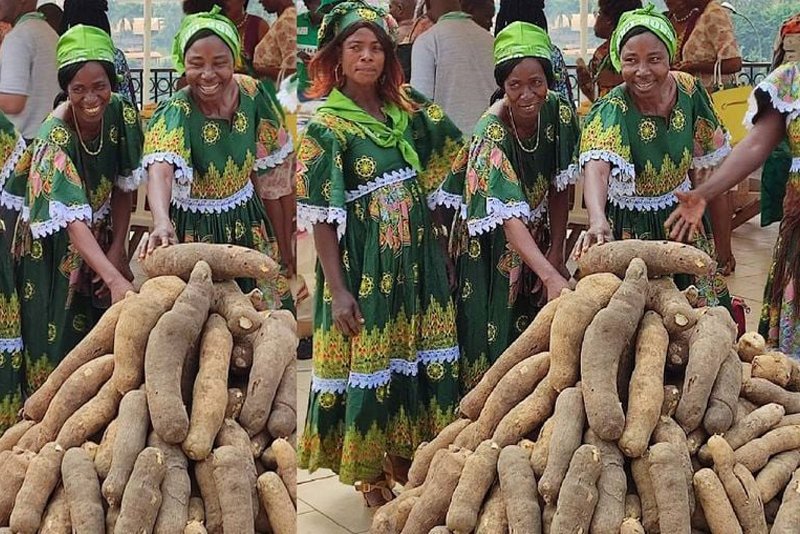
Diverse actors from 30 countries have called for a comprehensive Africa Food Policy that supports the continent’s need to feed itself in the face of global uncertainty and climate change. The social movements’ call followed the conclusion of the 4th Alliance for Food Sovereignty in Africa (AFSA) Biennial Food Systems Conference, which was held in Yaoundé, Cameroon, from November 28-30, 2022. Titled ‘Mobilising African Food Policy and Action for Healthy Food Systems’, the meeting drew over 170 participants. AFSA Chair Dr Chris Macoloo said the current food system based on the industrial agriculture narrative has failed to feed the world and Africa. He said that the food system has hurt human health, polluted the environment and fueled climate crises. “By giving an Afrocentric roadmap to healthy diets and sustainable food systems, this conference provides hope and optimism for a much-needed alternative solution to food insecurity, mounting public health disorders, and the climate catastrophe,” said Dr Macoloo. The conference highlighted novel approaches for learning and celebrating African food cultures, foods, diets, and cuisines to advance an African perspective on nutrition and food systems. Participants prepared cuisines from various African countries including Kenya. Cameroon’s Minister of Agriculture and Rural Development Gabriel Mbairobe, who opened the conference, said Africa’s food security was hugely impacted by the war in Ukraine and called on the continent’s leaders to look for ideas and strategies to produce “our food with lower prices” while guaranteeing healthier, accessible and sustainable diet. The event also marked the launch of the pan-African campaign “My Food Is African” which aims to inspire people in Africa to desire and demand traditional foods, dishes, diets and cuisines. AFSA general coordinator Million Belay said Africa must boost its capacity to respond to various crises such as pandemics, wars and climate catastrophes. “Agroecology is the best and most efficient way to build a food system that increases community resilience to climate change, provides healthy and sustainable diets, and protects the environment,” Dr Belay noted. During the conference a new book “My Food is African: Healthy Soil, Safe Foods, and Diverse Diets” was launched. The book, which is part of ‘My Food is African’ campaign, is aimed at sparking interest in Africa’s unique, delicious, and healthy foods and cultures as a way of fostering a safer, healthier, and more sustainable path to food sovereignty. Charles Mulozi, AFSA’s advocacy and campaign coordinator highlighted Africa’s need to celebrate its vast diversity, which is reflected in its diverse cultures, languages, and cuisine. “We cannot afford to rely solely on a few food crops, as this lowers the nutritional value of our diets, leaves our food system vulnerable to the climate crises and weakens our ability to adapt,” said Mr Mulozi. AFSA members and participants called on African governments to channel funding towards agroecology which builds resilience in food systems in the event of unpredictable events. The groups warned that the Covid-19 pandemic, the war in Ukraine and the potential uprising in the South China Sea could hold Africa’s food availability and accessibility hostage. The groups, therefore, also called on the African Union Commission (AUC) to anchor the development of the emerging Food Systems Policy on Africa’s diverse cultural foods and dishes and recognize their great value to people’s health and nutritional security. They urged donor communities to direct funding towards upscaling ‘My Food is African’ campaign, aligning policies and programmes towards the transition to agroecology which supports the consumption of healthy and culturally appropriate food, and increased investments in agroecological enterprises. They urged health experts, teachers, citizens, religious leaders, traditional leaders, institutions of learning, performing artists, media, fisher folks, pastoralists, MPs, state actors, academics, entrepreneurs, cooperatives, dieticians and consumer associations to join the campaign. This, they said, will ensure more people embrace the consumption of healthy and culturally appropriate food complete with a supportive policy.
UNCTAD urges African countries to rethink …
The continent’s free trade area, a growing middle class, an emerging consumer market, increased access to financial services and technology, and dynamic private entrepreneurs can help diversify African economies. African countries must diversify their exports to survive economic shocks from global crises such as the COVID-19 pandemic and the war in Ukraine, says the United Nations Conference on Trade and Development (UNCTAD). In its Economic Development in Africa Report 2022 published on 14 July, UNCTAD says African countries can diversify their economies through boosting exports of high-value services, expanding private businesses’ access to financial services, tapping into new financial technologies and implementing effective policies. Despite decades-long efforts to diversify, 45 out of the continent’s 54 countries remain dependent on exports of primary products in the agricultural, mining and extractive industries. UNCTAD considers a country to be dependent on commodities when these products make up more than 60% of its total merchandise exports. The report outlines how African countries can rethink efforts to diversify their economies. “Dependence on commodity exports has left African economies vulnerable to global shocks and hindered inclusive development for far too long,” said UNCTAD Secretary-General Rebeca Grynspan. She said Africa has enormous potential to break commodity dependence and ensure its effective integration into high-end global value chains. “By addressing barriers to trade in services, boosting relevant skills and improving access to innovative alternative financing, the region’s manufacturing productivity can be enhanced, driving Africa’s economic growth and structural transformation for many years to come,” Ms. Grynspan added. Promise of knowledge-intensive servicesUNCTAD says high knowledge-intensive services, such as information technology and financial services, could be a game-changer for Africa. But they account for only 20% of the continent’s services exports, leaving immense room for growth. Africa’s services sector is dominated by low-value-added transactions, making it unable to support productive activities for industry, manufacturing and agriculture sectors. Trade in services is also low in Africa. Between 2005 and 2019, services made up only 17% percent of the continent’s exports. Travel and transport accounted for about two thirds, representing a high concentration of traditional service sectors. To change its fortunes, UNCTAD says the continent should promote the use of high knowledge- and technology-intensive inputs to enable the manufacture and export of more complex goods and services rather than primary commodities. The report says technologies and smart services such as blockchain can improve access to diverse and competitive markets both within and outside the continent. More trade in services can also reduce the environmental degradation caused by the exploitation of natural resources. To diversify economies, UNCTAD calls on African countries to implement policies to better link trade in high-value services with other sectors, especially manufacturing. Countries also need to cut costs of services trade, remove protectionist policies, expand digitalization and boost the skills of workers in the sector. Private sector critical, needs at least $416 billion every yearThe report also underscores the critical role of the private sector – both formal and informal – in diversifying and transforming Africa’s economies. This includes small and medium enterprises (SMEs), which account for about 90% of firms on the continent and employ around 60% of its workforce. Africa has about 50 million formal SMEs, which can help diversify the continent’s exports, but they have an unmet financing need of $416 billion every year, according to the International Finance Corporation. UNCTAD says countries should better position African SMEs as engines of diversification by facilitating their access to affordable funds and financial services. Given the huge financing needs and the difficult access to banks’ corporate loans, the report calls for more innovative financial instruments for African SMEs to secure access to financing. UNCTAD urges African policymakers to help firms access specialized financial and non-financial products and services such as government loan guarantees that can better address the long-term financial needs of SMEs. The recent growth of financial technology (fintech) firms in Africa is spurring more innovation and investment opportunities. Fintech can improve traditional credit channels and help bridge the huge funding gap facing African SMEs, if countries implement policies to better harness its power, the report states. UNCTAD also calls on countries to tackle other hurdles facing African SMEs, such as poor integration to regional and global markets and lack of capacity to compete with large public and private firms. Free trade area needs effective export policiesThe African Continental Free Trade Area, which aims to create a single market for the continent’s 1.4 billion people, can also boost export diversification, the report says. But to make the best of it, African countries must implement policies to boost productive capacities, industrialization, encourage investment, improve regional integration and infrastructure. UNCTAD warns that global economic shocks, climate change and other challenges could undermine Africa’s export diversification efforts if countries don’t put in place the right policies, regulations and boost institutional capacities. As the world faces a cost-of-living crisis, 58 million people living just above the poverty line in Africa are at risk of sliding into poverty due to the combined effects of the COVID-19 pandemic and the war in Ukraine, according to a recent report of the Global Crisis Response Group on Food, Energy and Finance.
L’ADC participe à la concertation sous regionale sur l’inclusion financière
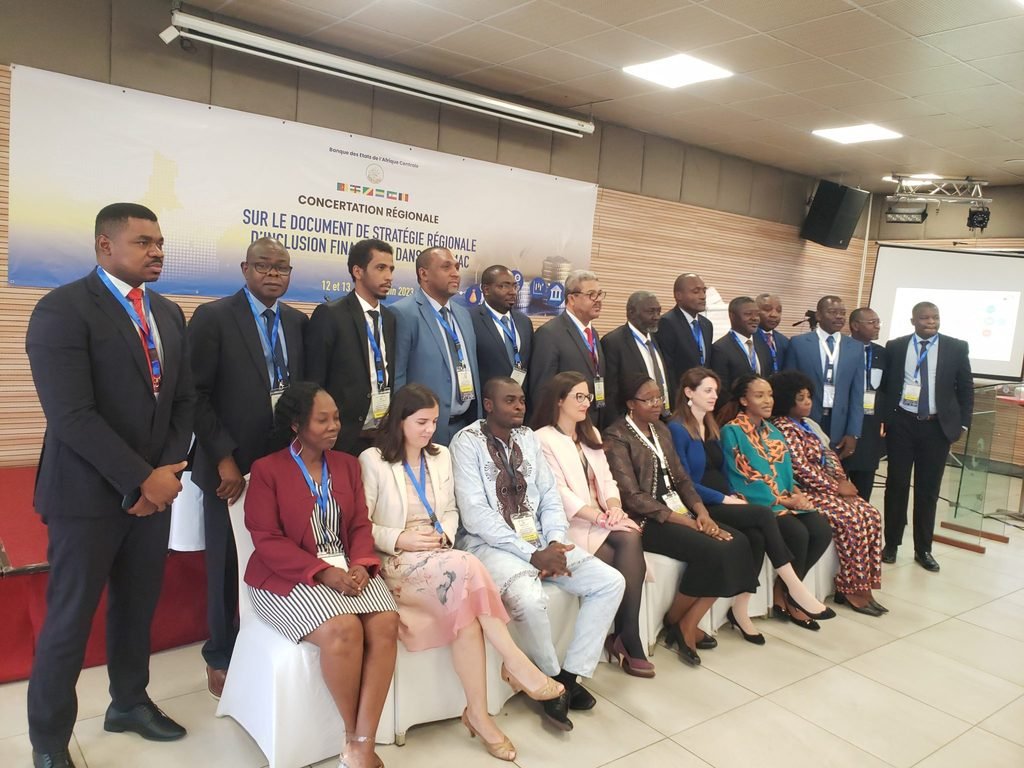
L’ADC a participé du 15 au 16 Juin à Douala (Cameroun) à la Concertation régionale organisée par la Banque des Etats de l’Afrique Centrale ((BEAC) sur la Stratégie regionale de l’inclusion financière. L’ADC a été représentée par Monsieur Yaya Sidjim, Secretaire aux Droits et Intérêts économiques. Cette concertation répond aux préoccupations des consommateurs exprimées lors de la rencontre d’échange sur l’inclusion financière organisée à Ndjamena par l’ADC le 29 Mars 2022 lors de la célébration de la journée Mondiale des Droits des Consommateurs 2022.
L’Alliance d’Afrique Francophone pour l’Eau et l’Assainissement s’est réunie à Conakry
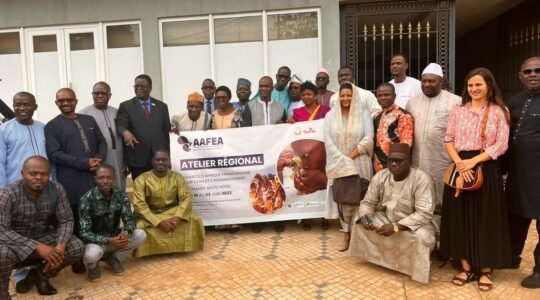
Avec l’appui de la Coalition Eau et de la Coalition Nationale Action et Plaidoyer pour l’Eau (CNAPE), l’Alliance d’Afrique Francophone pour l’eau et l’assainissement (AAFEA) a tenu son dixième atelier régional d’échange sur les questions d’eau potable et d’assainissement. L’atelier de cette année, tenu à Conakry, a vu la participation de la ministre guinéenne de l’environnement et du développement durable ainsi que des acteurs de la société civile de la Guinée et de neuf autres pays d’Afrique de l’Ouest et du Centre. Du 19 au 23 juin 2023, neuf collectifs de la société civile membres de l’AAFEA (Bénin, Burkina Faso, Cameroun, Mali, Niger, République de Guinée, Sénégal, Tchad et Togo) se sont réunis à Conakry pour échanger sur leurs mobilisations en lien avec l’eau potable et l’assainissement. La cérémonie d’ouverture de cet atelier a été présidée par la ministre guinéenne de l’environnement et du développement durable, Mme Hadja Safiatou Diallo, qui s’est personnellement engagée « à soutenir les efforts déployés pour promouvoir l’accès universel à l’eau potable, à des installations sanitaires adéquates et à des pratiques d’hygiène sûres dans notre pays ». Les ateliers d’échanges sont au cœur de la stratégie partenariale de l’Alliance (2023-2027) car ils constituent des espaces d’apprentissage, de renforcement mutuel, de rencontre et de mobilisation structurée des acteurs de la société civile. Au cours de cette semaine d’échange et de partage d’expériences, la question du suivi et de la mise en oeuvre de l’Objectif de développement durable (ODD) 6 « Garantir l’accès à tou.te.s à l’eau et à l’assainissement et assurer une gestion durable des ressources en eau » a été au coeur des débats. Les collectifs reconnaissent unanimement l’importance de disposer de données fiables pour évaluer les acquis et améliorer les politiques publiques dans le secteur de l’eau potable et de l’assainissement. L’atelier a également permis de : Enfin, lors de cet atelier, une session de présentation de la CNAPE, coalition regroupant des organisations de la société civile guinéenne de l’eau et de l’assainissement, a eu lieu. Sur la base de leur expérience, les collectifs des autres pays ont formulé des recommandations et conseils, à l’endroit des membres de la CNAPE, pour une bonne mise en route de cette structure dont la création est récente. Les collectifs de l’AAFEA poursuivront leurs échanges tout au long de l’année 2023 à travers des réunions virtuelles et outils de communication interne. Dans les prochains mois, les collectifs travailleront, entre autres, à la réalisation d’une publication de plaidoyer coordonné de l’Alliance. Enfin, l’un des enjeux phares de l’année sera d’aboutir à l’adoption d’une charte de fonctionnement de l’Alliance, qui permettra de donner un cadre de fonctionnement pour l’action collective, autour des valeurs partagées par les collectifs de l’Alliance : l’engagement, la responsabilité, la compétence et la solidarité. A propos : L’Alliance d’Afrique francophone pour l’eau et l’assainissement rassemble les collectifs de la société civile du secteur Eau et Assainissement de 10 pays d’Afrique de l’Ouest et du Centre. Elle oeuvre pour que les droits humains à l’eau et à l’assainissement soient une réalité universelle, notamment en Afrique francophone, et contribue, par ses actions, à l’atteinte des objectifs du développement durable (ODD) en particulier de l’ODD 6 « Garantir l’accès de tous à l’eau et à l’assainissement et assurer une gestion durable des ressources en eau